In the 1760s, most colonists in British North America were proud to be British. They respected the king, valued the British Constitution, and believed they had the same rights as people living in Britain. That is what makes the American Revolution so surprising. In just a little more than a decade, many of those same colonists decided to break away from the British Empire and create a new nation.
The Roots of Conflict
The causes of the American Revolution built up over time. During the 1700s, the colonies grew in population, trade, and wealth. Colonists also developed their own colonial assemblies, which gave them experience with local government. Many colonists believed Britain had followed a policy of salutary neglect, which meant it mostly left the colonies alone. Because of this, colonists grew used to governing many of their own affairs. They also believed they were entitled to the same rights as other British subjects. This included the right to be taxed only by their own elected representatives.
New Ideas Spread
During the 1700s, new ideas also changed colonial thinking. The Enlightenment encouraged people to use reason and question authority. The writings of John Locke taught that people had natural rights and that government should protect those rights. At the same time, the Great Awakening encouraged individuals to think more personally about religion and challenge traditional church authority. Together, these movements helped many colonists become more willing to question old systems of power.
Britain Tries to Tighten Control
After the Seven Years’ War ended in 1763, Britain had a huge empire but also a huge debt. British leaders decided that the colonies should help pay for the cost of defending the empire. Britain passed new laws, including the Sugar Act, the Currency Act, and the Stamp Act. Colonists were especially angry about the Stamp Act because it placed a direct tax on printed materials like newspapers, legal papers, and playing cards. Colonists argued that this was taxation without representation.
Colonial Resistance
The colonies responded in many ways. Some leaders passed formal protests in colonial assemblies. Merchants organized boycotts of British goods. Ordinary colonists joined protests in the streets. Groups such as the Sons of Liberty helped organize resistance. Colonial unity grew stronger as people in different colonies shared news and supported one another. Later British laws, such as the Townshend Acts and the Tea Act, caused even more anger. In 1773, colonists in Boston dumped tea into the harbor in protest during the Boston Tea Party.
Toward Independence
Britain answered colonial resistance with the Intolerable Acts, which punished Massachusetts and placed it under tighter control. Instead of isolating Boston, these laws pushed the colonies closer together. In 1774, colonial leaders met at the First Continental Congress to coordinate a response. Fighting soon broke out in Lexington and Concord in April 1775. At first, many colonists still hoped to reconcile with Britain. But as the war continued, more people began to support full independence. In 1776, Thomas Paine’s pamphlet Common Sense argued strongly for independence. On July 4, 1776, the Declaration of Independence announced that the colonies were now the United States of America.
The War for Independence
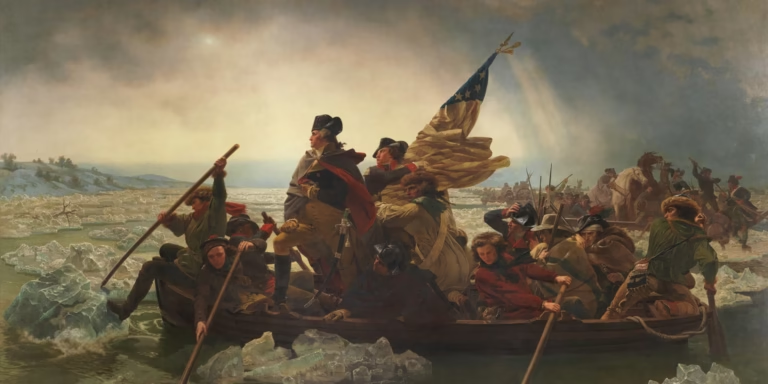
Winning independence was not easy. Britain had one of the strongest militaries in the world. Early in the war, the Americans suffered major defeats, especially in New York. Still, the Continental Army, led by George Washington, kept fighting. Important victories at Trenton and Saratoga helped turn the war. The victory at Saratoga convinced France to join the war as an American ally. French support gave the Americans more troops, money, and naval power. In 1781, American and French forces trapped the British army at Yorktown. British General Cornwallis surrendered, and this victory helped bring the war to an end. The war officially ended with the Treaty of Paris in 1783.
A New Nation
The Revolution created a new country, but it also raised new questions. The states wrote their own constitutions, and the new nation first operated under the Articles of Confederation. The Revolution increased political participation and encouraged ideas about liberty, rights, and popular sovereignty, which means that government gets its power from the people. At the same time, the Revolution had limits. Slavery continued. Women gained new responsibilities but not equal political rights. Native Americans often lost land as settlers moved westward.
Why It Matters
The American Revolution was one of the most important events in history. It created the United States and introduced ideas about liberty, natural rights, and self government that still shape America today.
It also inspired other revolutions around the world. At the same time, it showed that a nation could be founded on equality while still leaving many people out.
That is why the American Revolution matters. It helped create a new country, but it also began arguments about freedom and equality that Americans are still discussing today.
American Revolution: Interactive Quiz
Answer five questions based on the article. Check each answer to see an explanation.
Question 1 of 5