The Kent State Protest: A Day That Shocked a Nation
In the spring of 1970, the United States felt tense and divided. The Vietnam War had already lasted for years, and many Americans were tired of watching the conflict grow. Students across the country were holding rallies and marches, hoping their voices might help bring the war to an end. Among these students were those at Kent State University in Ohio, who soon found themselves at the center of a tragedy that would change how Americans viewed the war forever.
A Campus Filled With Concern
Kent State University was not unlike many other colleges at the time. Students talked about the war in classrooms, in the hallways, and in the grassy areas outside. Many felt frustrated about the recent U S decision to expand the war into Cambodia, a nearby country in Southeast Asia. To them, it looked like the war was getting bigger instead of smaller.
When President Richard Nixon announced the Cambodian invasion on television, students felt a mixture of shock and disbelief. Some worried their friends or siblings might be drafted next. Others wondered how much longer the war would last. It did not take long for the campus to rise in protest.
Protests Begin
On May 1, 1970, students gathered on the campus commons to speak out against the war. They held signs, chanted, and shared their fears about the growing conflict. The protest stayed peaceful, but tension on campus continued to build.
By the next day, confrontations between some students and local police broke out in the town near the university. Several buildings and cars were damaged. City officials became nervous and asked the governor to send help.
The National Guard Arrives
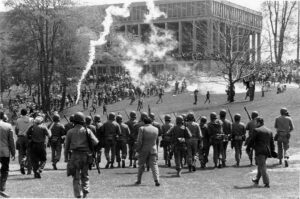
On May 2, the Ohio National Guard arrived at Kent State. Soldiers in uniforms and helmets marched across the quiet campus lawns, carrying rifles. Many students had never seen troops like this so close before. Some felt angry, others felt scared, but most simply wondered why their school suddenly looked like a military zone.
The next day, more protests took place. The National Guard used tear gas to try to break up the crowds. Students scattered, shocked and coughing, but the tension did not fade. If anything, it seemed to grow stronger.
A Deadly Turn
Everything came to a tragic stop on May 4, 1970. Another protest was planned for that afternoon. Students gathered once more, determined to speak out against the war and the Guard’s presence on campus.
The National Guard ordered the crowd to leave, but many students stayed. Tear gas drifted through the air, and some students threw rocks to show their anger. Then the Guard began to move up a hill, trying to push the crowd back.
Suddenly, and without clear warning, several guardsmen turned and fired their rifles. The echo of gunfire rolled across the campus.
It lasted only thirteen seconds, but it changed everything. When the smoke cleared, four students lay dead: Allison Krause, Jeffrey Miller, Sandra Scheuer, and William Schroeder. Nine others were wounded. Some of those shot had simply been walking to class. Shock spread across the campus like a cold wind.
A Nation Reacts
News of the shooting traveled quickly. People around the country watched in disbelief. Many could not understand how American soldiers had fired on American students. For millions, the tragedy at Kent State became a symbol of how divided the nation had become over the Vietnam War.
Protests grew even larger across the United States. Hundreds of colleges closed temporarily as students gathered to mourn and demand change. Families sat around their televisions, talking in hushed voices, trying to make sense of what had happened.
Kent State showed the world that the anger and fear surrounding the Vietnam War had reached a breaking point.
Why it Matters
Over time, the events at Kent State became a reminder of how dangerous and emotional political conflict can be. The tragedy encouraged many people to speak more carefully, listen more closely, and question the choices leaders made during the war.
Today, a memorial honoring the four students stands on the campus. Visitors come to walk the quiet grounds, read the names, and reflect on a day that shocked the nation and changed the path of American history.