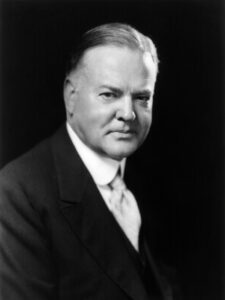
Who Was Herbert Hoover?
Herbert Hoover was the 31st President of the United States, serving from 1929 to 1933. He is often remembered for being president when the Great Depression began. Before his presidency, Hoover was a successful businessman and humanitarian. However, his response to the economic crisis damaged his reputation, and many blamed him for not doing enough to help struggling Americans.
Herbert Hoover’s Early Life
Herbert Hoover was born in 1874 in Iowa. After losing both parents at a young age, he was raised by relatives and worked hard to achieve success. He became a mining engineer and traveled the world for his career. During World War I, Hoover became famous for organizing food relief for war-torn Europe, earning him the nickname “The Great Humanitarian.”
Hoover’s Presidency
Herbert Hoover became president in 1929, just months before the stock market crash that led to the Great Depression. At first, many believed the economic troubles would be temporary. Hoover believed in rugged individualism, the idea that people should solve their own problems without relying too much on the government. He thought charities and local governments should help those in need, not the federal government.
Hoover’s Response to the Great Depression
As the Great Depression worsened, Hoover did take some action, but many Americans felt it wasn’t enough. Some of his efforts included:
- Public Works Projects: Hoover approved projects like the construction of the Hoover Dam to create jobs, though it was planned before his presidency.
- Federal Loans to Banks and Businesses: He provided loans to banks and businesses to help them stay afloat, hoping this would create jobs and stabilize the economy.
- Encouraging Volunteerism: Hoover asked businesses to avoid cutting jobs and wages, but this wasn’t very effective.
Despite these efforts, unemployment rose, and millions of Americans lost their homes. Many felt Hoover didn’t understand the struggles of ordinary people.
Why Was Hoover Criticized?
Hoover’s belief in limited government made him slow to take bold action. Many Americans wanted the government to do more to provide relief. Homeless people built shantytowns out of scrap materials and called them “Hoovervilles“ to blame the president.
One of the biggest blows to Hoover’s reputation came in 1932 when he ordered the Bonus Army—a group of World War I veterans—to leave Washington, D.C. The veterans were protesting for early payment of bonuses they had been promised. The U.S. Army, led by General Douglas MacArthur, used tear gas and burned their camps, which angered many Americans.
The Election of 1932
By 1932, the Great Depression was at its worst, and Hoover became deeply unpopular. In the presidential election, he lost in a landslide to Franklin D. Roosevelt, who promised bold actions to help Americans recover.
Herbert Hoover’s Legacy
After leaving office, Hoover continued to work on humanitarian projects and wrote several books. While many blamed him for the Great Depression, modern historians recognize that the economic crisis was a global problem, not just Hoover’s fault. Some of his policies, like federal loans to banks and businesses, influenced later New Deal programs.
Hoover’s presidency serves as a reminder of how leaders respond to crises and how public opinion can shape their legacy. Despite the criticism he faced, his earlier achievements as a humanitarian and engineer remain an important part of his life story.